A certification mark is only as good as the manufacturing behind it. Aquamor's systems are
certified to recognized NSF/ANSI standards, and they're validated in an in-house lab before they
ever reach a certification body or a customer.
What the Marks Mean
The certifications — and why a buyer should care
Each mark answers a different question. Here's what they cover and what they do for the person
making a purchasing decision.
NSF/ANSI 42
Aesthetic effects
Chlorine, taste, and odor reduction.
Why it matters to you
The water tastes and smells right, and the capacity is verified — e.g. 265,000 gallons of
chlorine reduction per carbon filter (NSF/ANSI 42 certified, per-filter rating).
NSF/ANSI 401
Emerging contaminants
Reduction of pharmaceuticals and emerging trace contaminants.
Why it matters to you
Addresses contaminant categories that health-conscious consumers and institutional buyers increasingly require.
Halal Certified
Halal compliant
Aquamor holds Halal certification for applicable products.
Why it matters to you
Certified compliant for halal markets — opens distribution channels requiring religious compliance documentation for food-contact filtration products.
EPA Registered
Federal and state registration
EPA-registered — federal and applicable state registrations.
Why it matters to you
Registration with the U.S. Environmental Protection Agency, federal and in applicable states — required for certain product categories and a meaningful compliance marker for institutional and government buyers.
NSF/ANSI 53
Health effects
Cyst and turbidity reduction, among others.
Why it matters to you
Contaminant-reduction claims that survive a buyer's — or a regulator's — review.
NSF/ANSI 372
Lead-free compliance
Low-lead material compliance for drinking-water system components.
Why it matters to you
Confirms the materials meet the federal lead-free requirement for drinking water contact.
NSF P473
PFOA / PFOS reduction
Reduction of the PFAS compounds PFOA and PFOS.
Why it matters to you
Addresses the PFAS contaminants increasingly required by buyers and regulators.
IAPMO
Independent listing body
Certification to NSF/ANSI standards by IAPMO R&T.
Why it matters to you
An independent, recognized listing body — a second name buyers and code officials trust.
CSA B483.1
Canadian drinking-water standard
Drinking-water treatment units — the Canadian standard.
Why it matters to you
Clears product for Canadian retail and distribution.
A note on the marks. Aquamor's certifiers include NSF,
IAPMO, and CSA. IAPMO certifies to NSF/ANSI standards
— it's a recognized independent listing body, not a separate standard. Halal certification and
EPA registration (federal and applicable states) apply to applicable product lines.
Specific listing numbers are mapped to each SKU on the product spec sheet.
The Lab Story
An in-house lab, not an outsourced afterthought
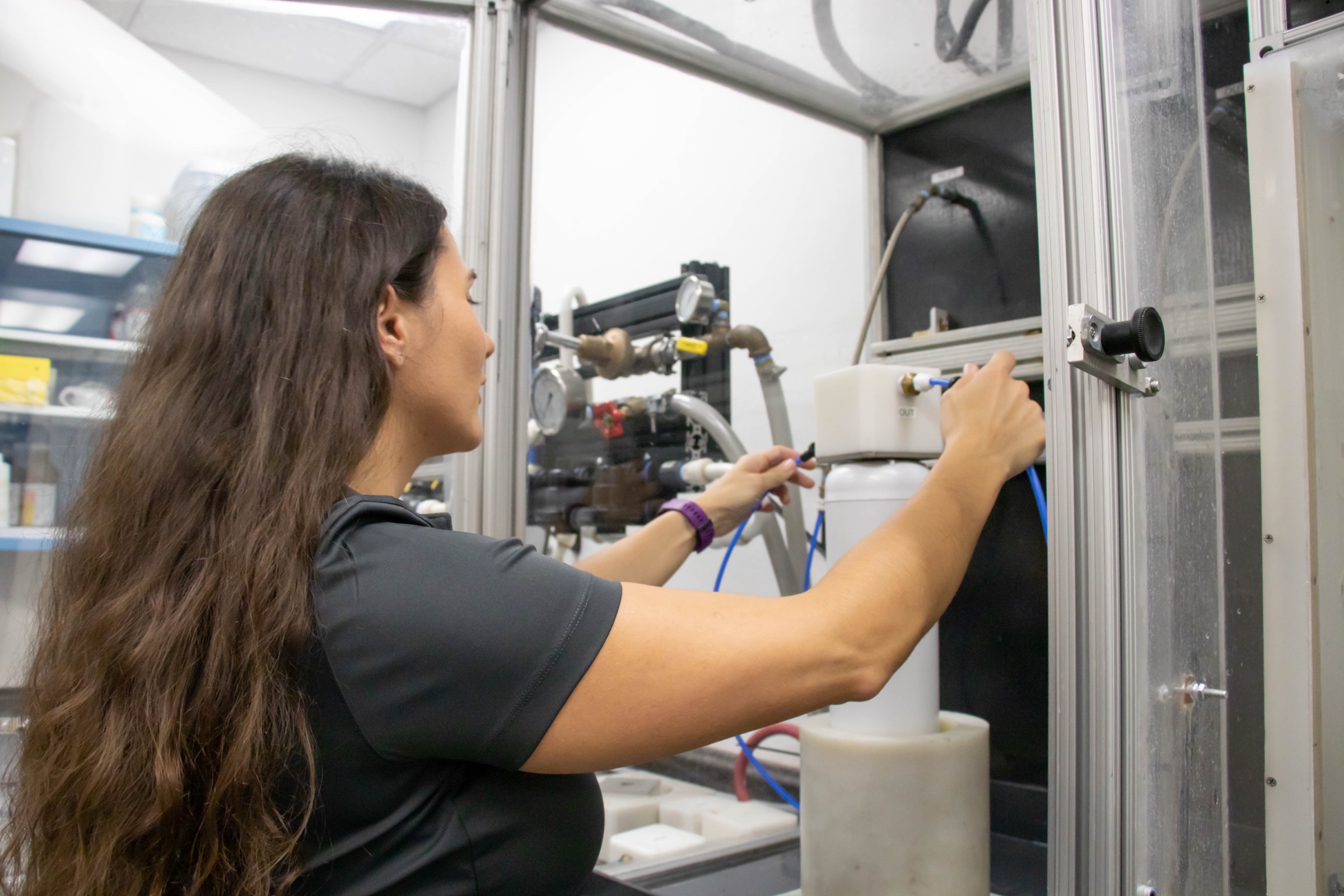
Aquamor runs quality labs and test stations throughout the company. Systems are tested in-house for
chlorine reduction, flow rate, pressure drop,
turbidity, and structural integrity — the same characteristics
that certification depends on. Testing where the product is made means a problem is caught on the
floor, not in the field.
For OEM and Retail partners, that in-house lab is also a due-diligence asset: the certification
rigor isn't a one-time audit exercise — it's how every unit is built and verified.
Need certification detail for a specific product?
We'll map the exact certifications and test data to the SKU or program you're evaluating.